

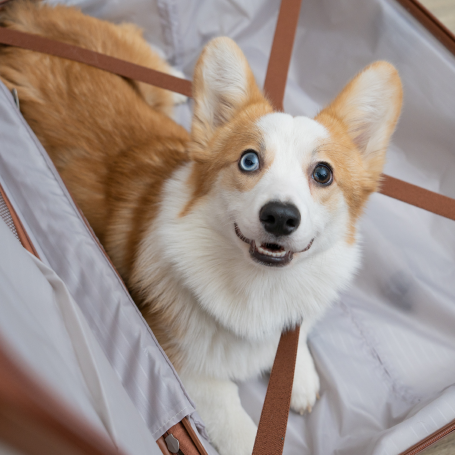
Traveling internationally with a pet involves strict, country-specific rules that vary widely by destination. This requires early planning with a USDA-accredited vet to complete the necessary health certificates, vaccinations (such as rabies), microchip, and treatments (such as parasite prevention), and have them endorsed by the USDA. Additionally, you must also meet the requirements of your airline and destination. These can include regulations on carrier sizes, required testing, and more.
If you’re traveling with your pet from state to state, you may need to meet specific health and documentation requirements. These vary by state, and some are more stringent than others. Your first step should be checking the USDA-APHIS page for interstate travel.
No matter where you are planning to travel with your pet, the USDA APHIS website is your key resource and the place to start your research.
Key Steps for International Pet Travel
- Start Early & Find a Vet: Contact a USDA-accredited veterinarian as soon as you know you’re planning to travel. All of the veterinarians at San Bruno Pet Hospital are USDA-accredited. An examination is required for the veterinarian to complete the Health Certificate, which certifies your pet is healthy enough to travel. This often needs to be scheduled within a certain number of days of the departure date (usually within 10 days, but this varies with country requirements).
- Check Destination Rules: Use the USDA APHIS website to find your destination country’s specific rules (timelines, vaccinations, microchips, tests, treatments).
- Get Documentation: Obtain a Health Certificate document from your veterinarian at your exam appointment and have it endorsed by the USDA. Some countries need translations.
- Meet Airline Rules: Check your airline’s specific policies on carrier size, age, and health certificates (often needed within 10 days of travel).
- Health & Wellness: Ensure your pet has up-to-date vaccinations, needed parasite treatments, and, if applicable, a microchip.
Other Helpful Info:
- International health certificates also require a copy of your pet’s most recent rabies certificate. This certificate comes from the veterinarian who administered the vaccine and should include: name, age, sex, breed, and color of the pet; the date of the rabies vaccine; when the next vaccine is due; the name, manufacturer, and serial number of the rabies vaccine; the microchip number of the pet; and the signature and hospital information of the veterinarian who administered the veterinarian.
- Many of the countries require an endorsement from the USDA after we create the health certificate here. For most of these countries, we (San Bruno Pet Hospital) will electronically send the completed health certificate to the USDA for endorsement, and the USDA will mail the hard-copy documents back to you. For this to happen, you need to supply us with a shipping label for the USDA to use – this should be an overnight shipping label and can be from either FedEx or UPS.
- Some countries have vaccine requirements beyond rabies, so after scheduling your appointment at SBPH, please email us a copy of your pet’s medical record.
Please consult the USDA APHIS website, which spells out individual destination requirements in more detail. It is your responsibility to conduct the necessary research and planning to ensure your pet meets all travel requirements, and you are strongly encouraged to look at this website before your appointment.
USDA Endorsement Is Outside the Clinic’s Control:
- Once your pet’s paperwork is submitted to the USDA, the review, processing time, approval, or rejection is entirely outside the control of San Bruno Pet Hospital.
- Delays may occur due to USDA processing times, mailing or courier delays, staffing limitations, system issues, holidays, or other factors beyond the clinic’s control.
There is a No Refund Policy for USDA-Related Delays or Denials.
- Fees paid for veterinary services rendered and electronic submission are non-refundable.
- No refunds or credits will be issued if paperwork is delayed, not endorsed, or returned late by the USDA, resulting in postponed or canceled travel.
